In this post, we will explore the key differences between extrusion molding and injection molding, covering the basics of each process, their advantages and limitations, common applications, cost factors, and so on.
We hope it could help beginners quickly understand the basics of both molding techniques. For professionals, some of the content may be more introductory, but we welcome your feedback and insights in the comments section. Let’s get started!
What is Extrusion Molding
Extrusion molding is a manufacturing process that’s used to create objects with a consistent cross – sectional shape.
The Process of Extrusion Molding
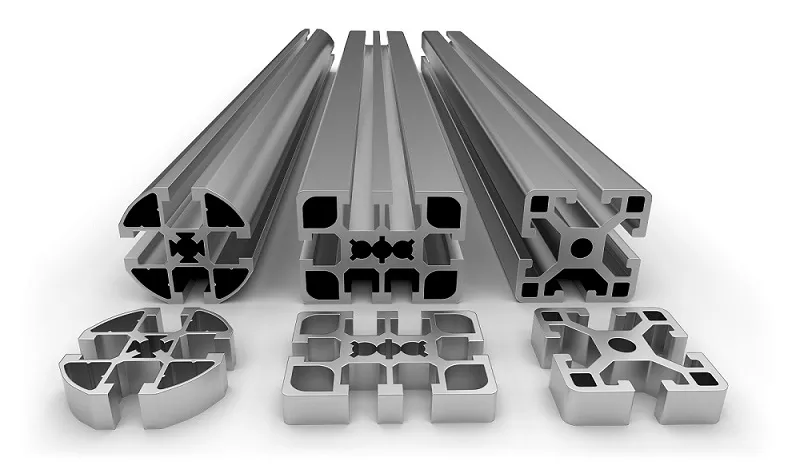
It’s kind of like squeezing toothpaste out of a tube. The raw material, usually a thermoplastic or a rubber compound, is first fed into a hopper. From there, it moves into a barrel where it’s heated (in the case of hot extrusion) to a semi – liquid state that allows it to flow easily. A screw mechanism then pushes the softened material through a die, which is a specially – shaped opening. As the material passes through the die, it takes on the shape of the die’s cross – section.
For example, if the die is shaped like a circle, the extruded material will come out as a tube. Once the material has passed through the die, it cools and solidifies. It can then be cut into specific lengths to create the final products.
Applications of Extrusion Molding
Extrusion molding is used in a wide range of industries. In the construction field, it’s used to make pipes and tubing for plumbing systems. Window frames and siding are also often made using extrusion molding because it can produce long, continuous pieces with a consistent shape.
In the automotive industry, it’s used to create components like windshield wipers and weatherstripping around doors and windows. These parts need to have a consistent cross – section to fit properly and provide a good seal.
The medical field also benefits from extrusion molding. It’s used to produce tubing for various medical devices such as catheters and IV lines. The ability to produce long, sterile tubes with a precise cross – section is crucial for these applications.
Advantages of Extrusion Molding
One of the main advantages of extrusion molding is its cost – effectiveness, especially for high – volume production of simple shapes. Because the process can produce continuous lengths of material, it’s efficient for making long parts like pipes. The surface finish of extruded products is usually quite good, too.
Limitations of Extrusion Molding
However, extrusion molding does have some limitations. The initial setup costs for the machinery and dies can be high. There can also be some variation in the size of the final product due to factors like material shrinkage during cooling. And it’s typically limited to producing one type of cross – section at a time, so it’s not as suitable for complex, multi – shaped designs.
What is Injection Molding
Injection molding is a highly versatile manufacturing process used to create a wide variety of plastic and rubber parts with complex shapes.
The Process of Injection Molding
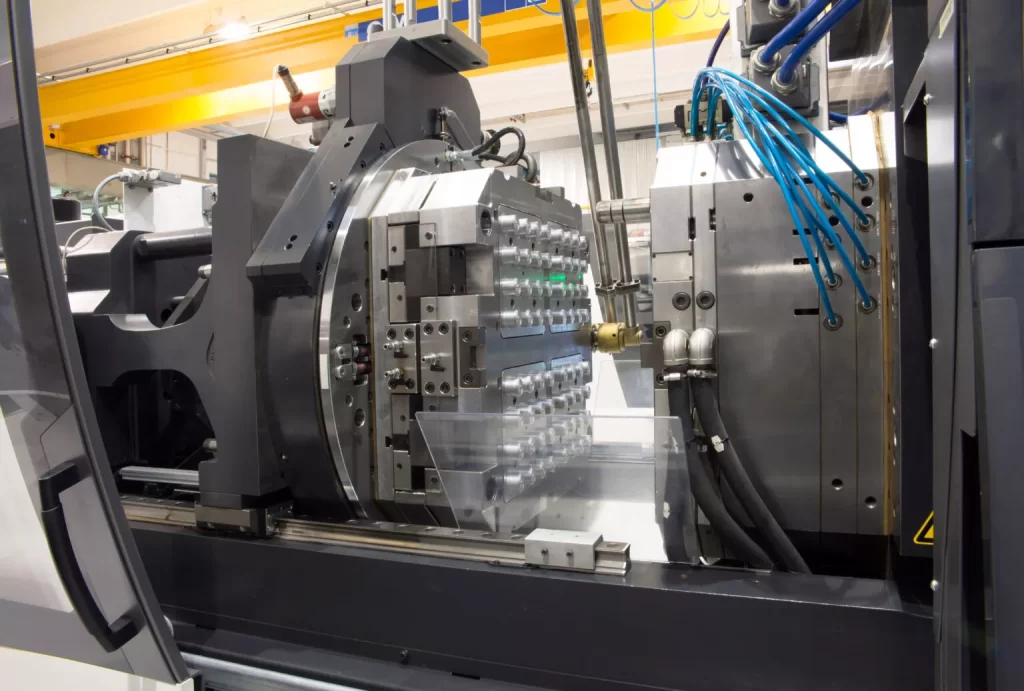
Imagine a syringe filled with a thick, molten liquid. Injection molding works in a similar way. The process starts with plastic resin pellets or liquid rubber being loaded into a hopper. These materials are then heated in a barrel until they turn into a molten state, like a thick liquid.
This molten material is then injected under high pressure into a mold cavity. The mold is usually made of metal, such as aluminum or steel, and has been carefully designed and machined to have the exact shape of the desired part. Once the mold cavity is filled, the molten material cools and solidifies, taking the precise shape of the cavity. Finally, the solid part is ejected from the mold.
For example, if you want to make a plastic toy car, the detailed shape of the car’s body, wheels, and other components can be precisely replicated using injection molding.
Applications of Injection Molding
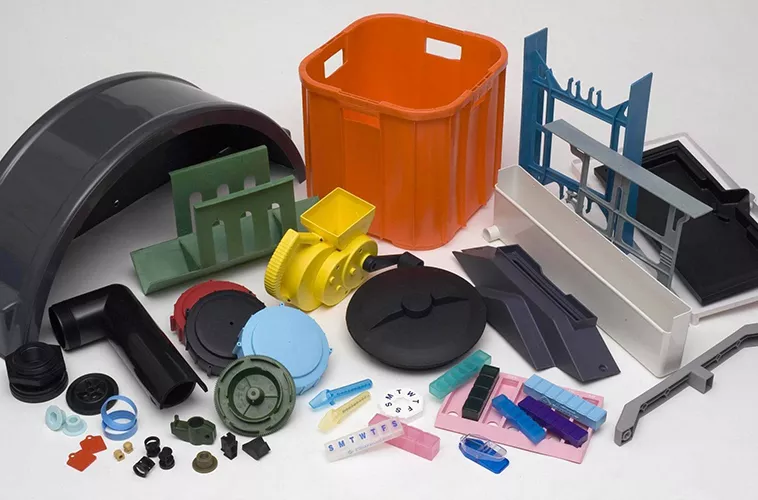
Injection molding has a vast range of applications. In the automotive industry, it’s used to manufacture large parts like dashboards, bumpers, and smaller interior components such as knobs and buttons. The consumer goods industry depends on it for creating toys, packaging materials, and various household items like plastic containers and utensils.
In the medical field, injection molding is used to produce syringes, surgical instruments, and even parts of complex medical devices. In electronics, it’s essential for making the casings of mobile phones, laptops, and other devices, as well as connectors and small internal components.
Advantages of Injection Molding
One of the biggest advantages of injection molding is its ability to produce highly complex three – dimensional parts with intricate geometries. It can create parts with internal cavities, undercuts, and fine details. The process also allows for precise control of dimensions and tight tolerances, ensuring that each part is consistent in quality and can fit together with other components accurately.
Another advantage is the wide range of materials it can handle. You can use different types of plastics and elastomers, including high – performance polymers and composites, to achieve specific mechanical, thermal, or chemical properties. It’s also suitable for both high – volume and low – volume production, with the option to use different mold materials to optimize costs.
Limitations of Injection Molding
The main drawback of injection molding is the relatively high cost of tooling. The molds can be quite expensive to design and manufacture, especially for complex parts. The lead time for creating these molds can also be long, which might delay product development. Additionally, the process generates more material waste in the form of sprues and runners (the channels through which the molten material flows into the mold), although recycling options are available for some of this waste.
What’s the difference between Extrusion Molding vs Injection Molding?
Extrusion molding and injection molding are two different manufacturing processes with several key distinctions:
1. The Shape and Complexity of the Final Product
- Extrusion Molding:
- It’s best for creating parts with a consistent cross – sectional shape. The products are usually long and have a relatively simple geometry. For example, it’s ideal for making pipes, tubing, and simple profiles like window frames or weatherstripping. These parts are often two – dimensional in nature, meaning they have a length and a consistent cross – section, but limited complexity in other directions.
- While it can produce parts with some complexity in the cross – sectional shape, it generally can’t create objects with internal cavities or intricate three – dimensional details like undercuts as effectively as injection molding.
- Injection Molding:
- Is designed to produce highly complex three – dimensional parts. It can create objects with internal cavities, such as a hollow toy ball, or parts with undercuts like a plastic container with a recessed handle. The process allows for a wide range of geometric complexity, making it suitable for manufacturing everything from small, detailed components like gears to large, complex structures like automotive dashboards.
2. The Manufacturing Process
- Extrusion Molding:
- The raw material is continuously pushed through a die. The material first enters a hopper, is heated (if necessary), and then a screw mechanism forces it through the die. The extruded material comes out as a continuous length and is then cut to the desired size. It’s a relatively continuous process that’s good for producing long, uniform parts in large quantities.
- The die determines the shape of the part, and once the process is set up, it produces parts with the same cross – section. There’s less flexibility in changing the shape during the production run compared to injection molding.
- Injection Molding:
- The material is melted and then injected under high pressure into a mold cavity. The mold is a closed – off space that gives the part its final shape. The process involves loading the material, melting it, injecting it, cooling it in the mold, and then ejecting the finished part.
- It’s a more batch – oriented process, where each cycle produces one or more parts depending on the mold design. The mold can be designed to create multiple cavities, allowing for the production of several parts at once. Also, it’s possible to change the mold relatively easily to produce different shapes, although this can be costly and time – consuming.
3. Material Considerations
- Extrusion Molding:
- Commonly used for thermoplastics and some rubber materials. Thermoplastics are favored because they can be softened and reshaped, which is necessary for the extrusion process. The material needs to have the right flow characteristics to pass through the die smoothly.
- There’s a focus on materials that can maintain their shape after extrusion and cooling. The range of materials is somewhat more limited compared to injection molding, especially when it comes to creating complex multi – material parts.
- Injection Molding:
- Can handle a broader range of materials, including various thermoplastics, thermosets, and elastomers. It’s possible to use high – performance polymers and composites to achieve specific mechanical, thermal, or chemical properties.
- The ability to choose from a wide range of materials allows for more customization in terms of the final product’s properties. For example, in the medical field, different types of biocompatible plastics can be used to meet specific requirements for sterility and durability.
4. Cost and Production Volume
- Extrusion Molding:
- Has lower tooling costs because the dies are generally simpler and less expensive to manufacture than injection molds. For high – volume production of simple parts with a consistent cross – section, it can be a very cost – effective process. The cost per part decreases as the production volume increases due to the continuous nature of the process.
- However, if you need to produce a small number of parts or parts with complex shapes, the initial setup cost might not be justified, and the unit cost could be higher than expected.
- Injection Molding:
- Tooling costs are higher because the molds are more complex and require more precision machining. But for high – volume production of complex parts, the cost per part can become reasonable as the mold cost is spread over a large number of units.
- It’s also more suitable for low – volume production of custom or high – value parts, although the cost per part will be relatively high due to the mold cost. The flexibility to change the mold design allows for more customization in small – batch production.
5. Surface Finish and Details
- Extrusion Molding:
- Produces parts with a relatively smooth surface finish, especially for simple profiles. However, the ability to add detailed surface textures or logos is more limited compared to injection molding. The surface of extruded parts is usually consistent along the length of the part due to the continuous extrusion process.
- Injection Molding:
- Can achieve a high – quality surface finish and is capable of adding detailed textures, patterns, and even small lettering or logos to the part’s surface. The mold can be designed to create specific surface details, and the injection process ensures that these details are replicated accurately on each part.
Thanks for reading till the end!
We hope it has helped you understand the key differences between extrusion molding and injection molding. If you have any additional questions or insights, we’d love to hear your thoughts in the comments section. We’ll continue to bring you more insights and updates on injection molding in the future. We look forward to exploring more manufacturing processes with you!