
CNC Routing Service
Our online CNC routing service ensures the sharp edges and tight tolerances you require. Request a quote for custom parts through our online CNC routing platform. Rapidly prototype and produce parts within days.
Our Online CNC Routing Services
Fuming is a trusted industry provider of innovative CNC routing solutions. Combining deep expertise, cutting-edge technology, and an unwavering commitment to quality, Fuming has become the preferred partner for businesses and individuals seeking top-tier CNC routing services for producing components and finished parts. We take pride in delivering the highest quality solutions to every customer.
We collaborate with businesses on both recurring and one-off projects, and our services extend to specialized applications as well. No project is too small or too complex for our team. With fast turnaround times and competitive pricing, we lead the market in providing CNC routing services to global companies seeking to accelerate their manufacturing processes.
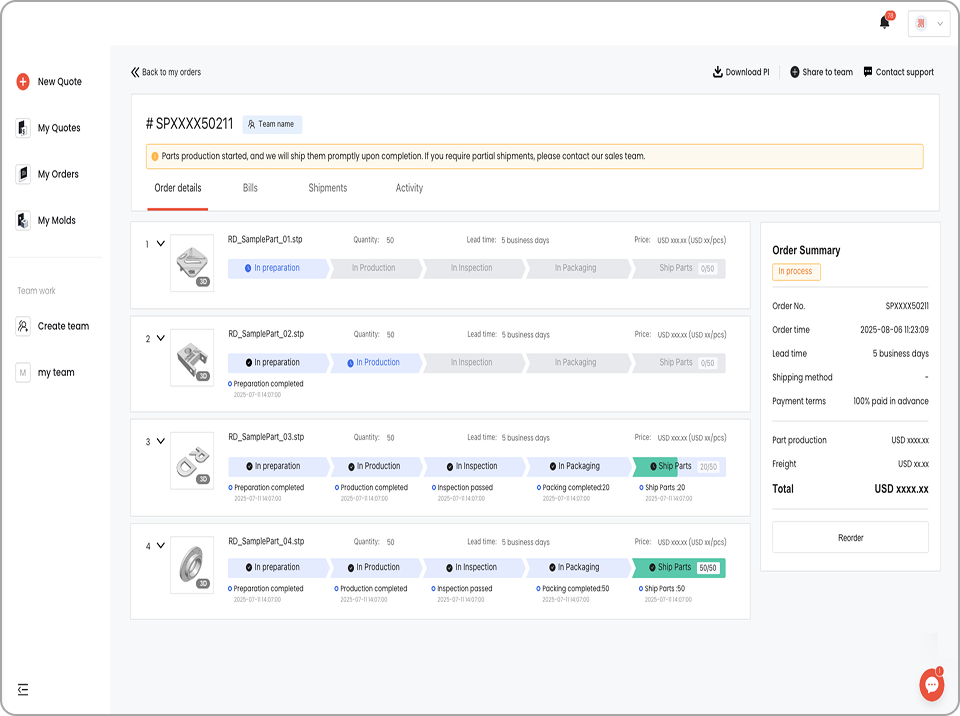
Ordering Custom CNC Routing Parts Has Never Been Easier
With our team of highly skilled machinists and advanced manufacturing technology, designing and ordering CNC routed parts is now simpler than ever. Just upload your design to our platform, choose your material, add any additional services, and receive an instant quote.
What Is CNC Routing?
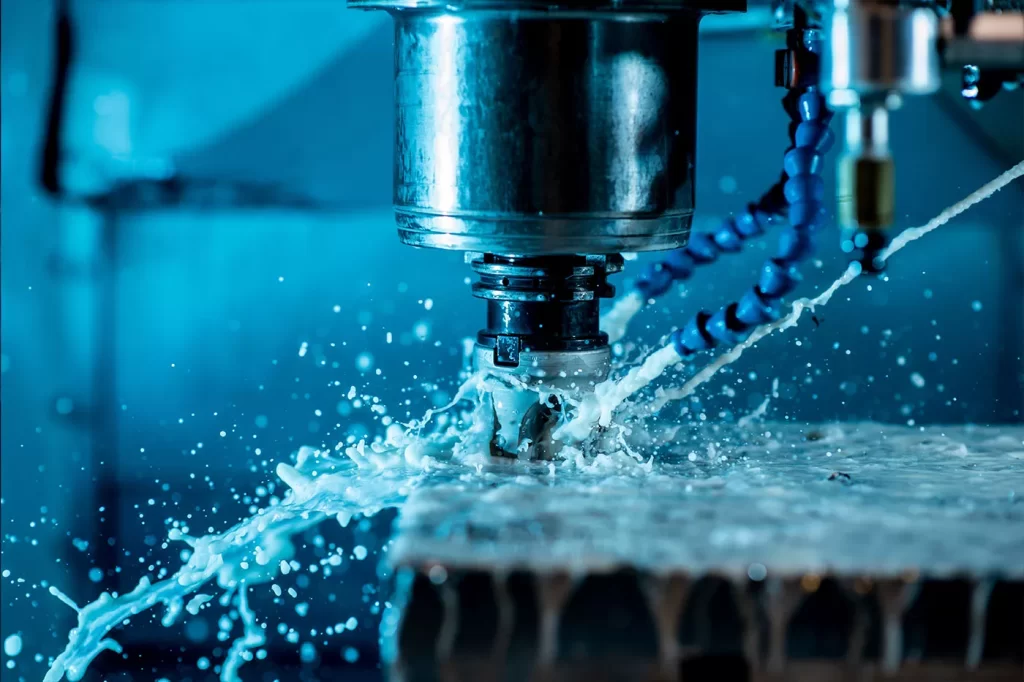
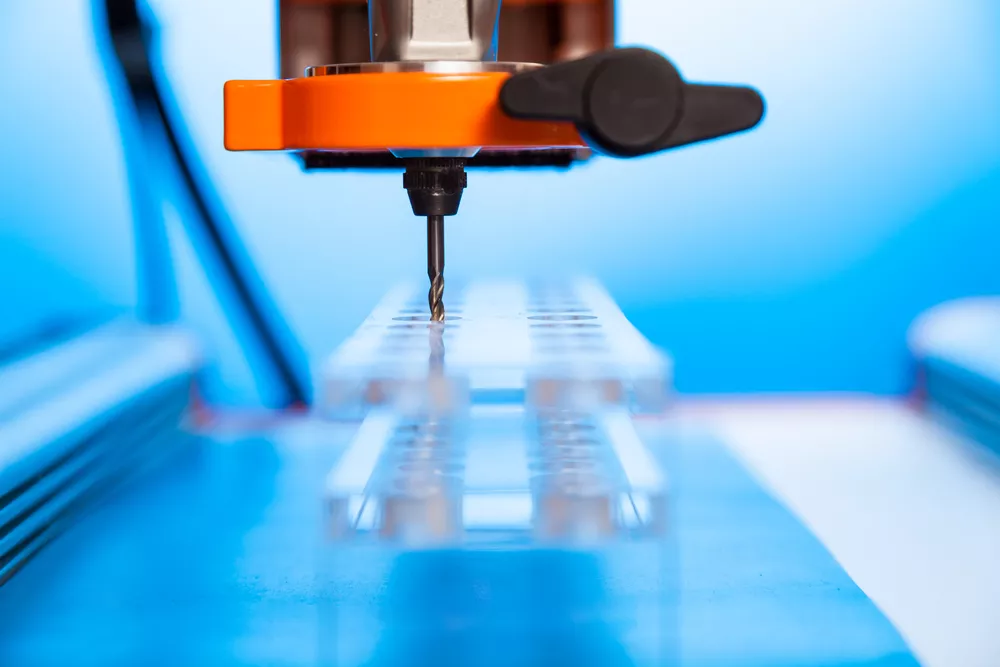
CNC routing is a subtractive manufacturing process where a rotating cutting tool removes material from a sheet or workpiece. Guided by computer numerical control (CNC), the router primarily moves along two axes (X and Y), with the third axis (Z) enabling vertical plunging to achieve the desired part geometry. The router spindle rotates on an axis perpendicular to the worktable, holding the cutting tool above the sheet material. As the tool rotates, the computer precisely controls its path, removing material to form intricate shapes and contours. CNC routers excel at producing accurate cuts for complex designs with efficiency.
Cutting Tool: CNC routing utilizes a rotating router bit as the primary cutting instrument. In contrast, CNC milling employs a rotating multi-point tool called an end mill, while CNC turning uses a single-point cutting tool to shape cylindrical components.
Material Orientation: CNC routing machines are typically designed to accommodate flat or sheet materials—such as plywood or acrylic sheets—secured to a stationary table. CNC milling and turning, however, generally work with block or cylindrical workpieces.
Cutting Direction: CNC routing primarily operates along the X and Y axes, cutting across the plane of the material. CNC milling and turning machines can move across multiple axes simultaneously, enabling more complex three-dimensional machining.
Applications: While some overlap exists, CNC routing is commonly associated with large-scale cutting applications like furniture production, sign making, and cabinetry. CNC milling is preferred for precise, intricate part machining, whereas CNC turning is ideal for producing cylindrical or rotational components such as shafts and fittings.
Advantages of CNC Routing
CNC routing provides numerous benefits compared to traditional manual routing or alternative manufacturing methods such as plasma or laser cutting. Key advantages include:
- Tight Tolerances: Achieve precise, accurate cuts consistently across production runs.
- Flexibility: Easily accommodate design changes and work with various materials and thicknesses.
- Reproducibility: Produce identical parts repeatedly with minimal variation, ideal for both prototyping and volume production.
- Complex Shapes and Intricate Designs: Execute detailed geometries and sophisticated patterns that would be challenging or impossible with manual methods.
CNC Routing Process at Fuming
At Fuming, we follow a structured process to transform your designs into finished products using CNC routing:
- Design the Part: Begin by creating your part using computer-aided design (CAD) software and save it as a vector file. Common vector formats include DXF, AI, BMP, CDR, DWG, PDF, STL, and SVG. These formats ensure compatibility with various CNC machines and software, enabling seamless transfer and accurate interpretation of your design data.
- Upload CAD File: The next step is uploading your CAD file to our website in a compatible format using our instant quoting tool. Once your quote is accepted, we proceed to the next phase.
- G-Code Conversion: After quote acceptance, Fuming converts the CAD file into G-code using CAM (computer-aided manufacturing) software. This process translates vector designs into machine-readable language that CNC routers understand, generating precise instructions for tool paths, cutting operations, and desired shaping or engraving based on your original design. Other processes at Fuming, including laser cutting and additional CNC services, follow similar conversion methods.
- CNC Routing Execution: Fuming then initiates the routing process by running the CNC program. The machine follows the pre-programmed toolpath, cutting and routing the material exactly to your design specifications.
- Finishing and Post-Processing: Upon completion of routing, finished parts may undergo post-processing steps such as sanding, polishing, or surface treatment to achieve the required final appearance and quality standards.
Common Materials for CNC Routing
CNC routers are compatible with a diverse range of materials, including soft metals, wood, plastics, and composites. Below is a list of commonly used materials:
- ABS (Acrylonitrile Butadiene Styrene)
- ACM Panel (Aluminum Composite Material)
- Baltic Birch Plywood
- HDPE (High-Density Polyethylene)
- MDF (Medium-Density Fiberboard)
- Polycarbonate
- Foam
- UHMW (Ultra-High Molecular Weight Polyethylene)
- Aluminum
- Brass
- Composites
Applications of CNC Routing
CNC routing is widely employed across numerous industries for producing finished parts and functional components. Common applications include:
- Wooden Furniture Manufacturing
- Signage and Display Fabrication
- Molds for Thermoforming Processes
- Cabinetry and Architectural Millwork
- Prototyping and New Product Development
- Engraving and Custom Personalization
- Automotive and Aerospace Component Production
Additional Services From Fuming
Below are some of the complementary services we offer to further support your project needs.
Prototyping and Fabrication
The Fuming team provides comprehensive prototyping services supported by a dedicated in-house fabrication department, addressing unique client application requirements. From packaging solutions to product design, we manufacture with fast turnaround times while maintaining superior quality across all deliverables.
Warehousing & Fulfillment
Fuming offers efficient and cost-effective delivery solutions, with the flexibility to ship directly to you or your customers. Our warehousing and fulfillment services are safe, secure, and affordable.
Below are some of the complementary services we offer to further support your project needs.
Prototyping and Fabrication
The Fuming team provides comprehensive prototyping services supported by a dedicated in-house fabrication department, addressing unique client application requirements. From packaging solutions to product design, we manufacture with fast turnaround times while maintaining superior quality across all deliverables.
Warehousing & Fulfillment
Fuming offers efficient and cost-effective delivery solutions, with the flexibility to ship directly to you or your customers. Our warehousing and fulfillment services are safe, secure, and affordable.