
Selective Laser Sintering (SLS) 3D Printing Service
Selective Laser Sintering (SLS) is an advanced 3D printing technology ideal for producing durable, industrial-grade parts on demand. Simply upload your CAD file to receive instant quotes for your SLS components.
Selective Laser Sintering (SLS) 3D Printing Service
SLS printing is ideal for rapid prototypes, low-to-mid volume production, and functional testing applications. This technology excels at producing durable prototypes requiring strength, delivering functional plastic parts with mechanical properties suitable for prototyping and limited production runs.
Selective Laser Sintering (SLS) is an advanced 3D printing process that fuses fine plastic powder particles—such as nylon and carbon fiber composites—using laser technology to create solid, functional objects. Fuming offers premier SLS 3D printing services, making it the preferred choice across industries including consumer goods, factory tooling, aerospace components, and beyond.
We manufacture your 3D printed parts with precision, faithfully reproducing your original designs and delivering within our committed timeframe. Let us serve you!
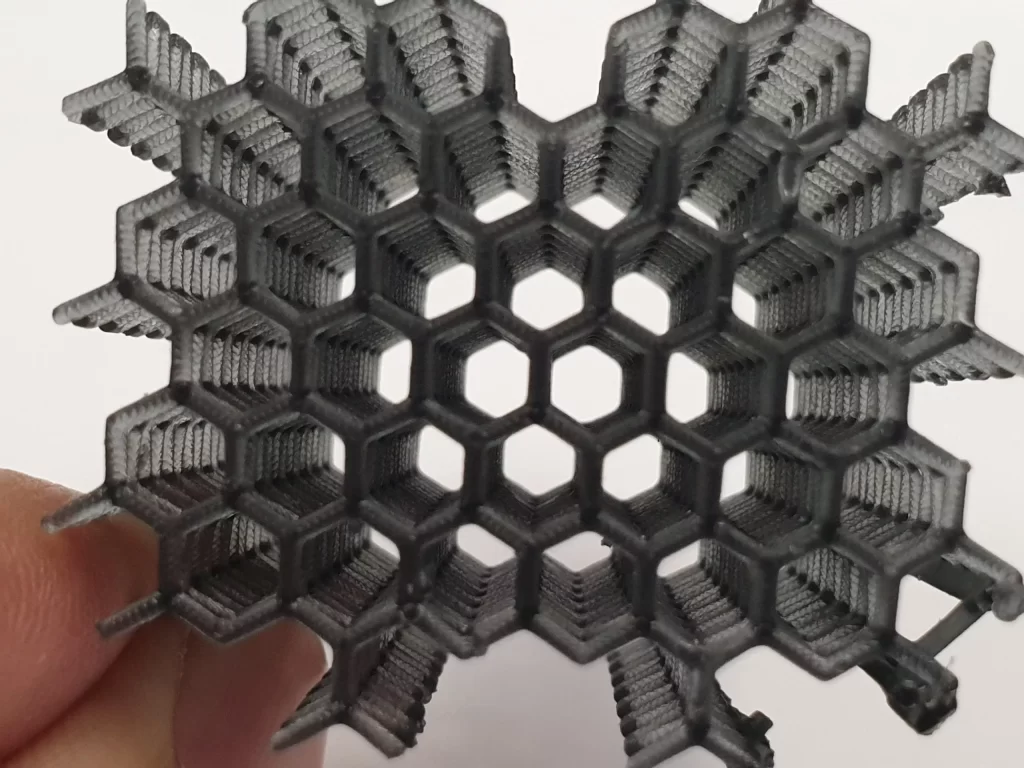
Experience Our Selective Laser Sintering (SLS) 3D Printing Service
Fuming produces your parts exactly as designed using our advanced SLS 3D printing service. Simply upload your CAD files to our instant quotation platform to receive an immediate quote, or contact us through our inquiry page for a quick response.
SLS Capabilities
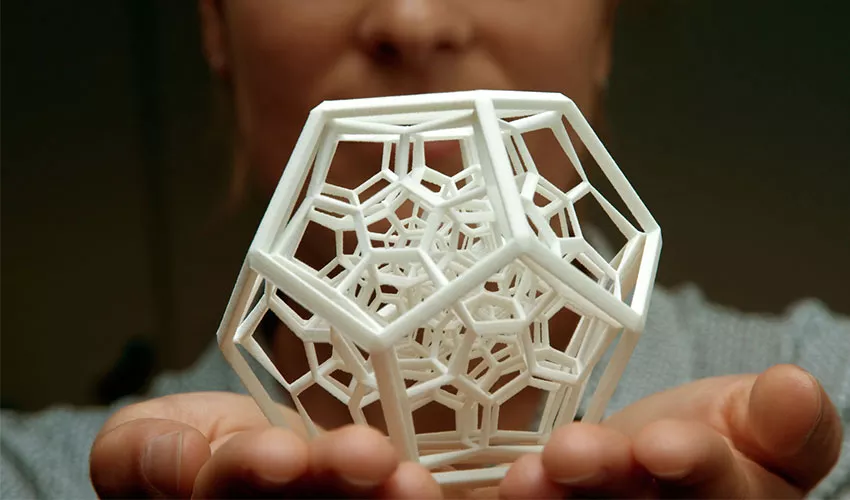
SLS is an additive manufacturing technology that uses a laser to fuse plastic powder particles together, building parts layer by layer. This powder bed fusion process offers a cost-effective alternative to injection molding for short production runs of small components. SLS technology imposes virtually no geometric limitations, providing the freedom to design and print complex structures with ease.
| Maximum Printing Size | 350*350*400mm |
| Lead Time | 48 hours or 72 hours |
| Tolerance | ± 300μm or 0.3%mm |
| Minimum Layer Thickness | 0.8 mm |
Applications of SLS
Concept Models: SLS is a preferred technique for creating concept models due to its ability to produce complex shapes with fine detail and precision.
Rapid Prototypes: SLS enables fast and affordable part production, making it an excellent choice for new product innovation and rapid iteration of prototype components. Additive manufacturing helps you avoid the expense of reworking—or worse, completely scrapping—an expensive mold.
Bridge Production: Tooling lead times for large injection molded parts can be lengthy. SLS parts serve as an effective solution to bridge production gaps while your permanent tools are being manufactured.
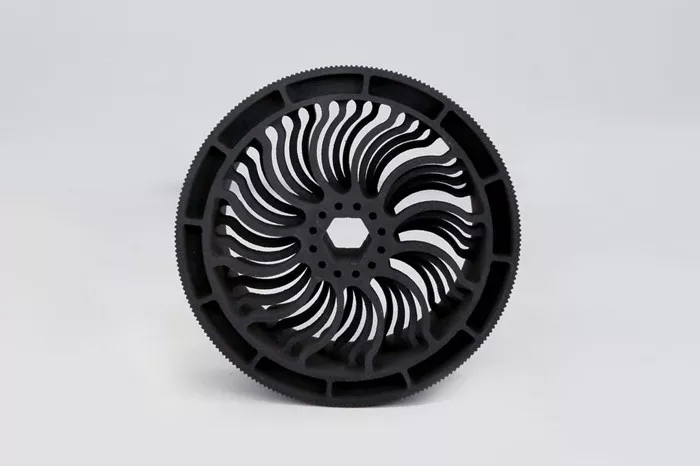
Durable Production Parts: The inherent isotropic strength of SLS components provides excellent mechanical properties suitable for demanding applications across various industries.
Mass-Customized Parts: SLS technology enables efficient simultaneous production of multiple prototype variations, allowing for rapid customization and quick adaptation to evolving customer requirements.
Industries Benefiting from SLS Parts Include: Medical devices, aerospace components, automotive parts, and general manufacturing applications.
Ready to Get Started?
From initial design through prototyping and full production, our team of engineers is ready to help bring your concepts to life using Selective Laser Sintering (SLS) 3D printing technology.
What is Selective Laser Sintering (SLS)?
Selective Laser Sintering (SLS) is an industrial additive manufacturing process that fuses powdered thermoplastic polymers using a high-powered laser. The laser selectively sinters powder particles, binding them together layer by layer to create solid structures. SLS delivers exceptional part throughput through its unique ability to nest thousands of components within the machine build volume without requiring support structures. This capability makes it suitable not only for rapid prototyping but also for high-volume production of end-use parts.
SLS offers five high-performance 3D printed materials featuring durability, electrostatic dissipation, temperature resistance, USP Class VI biocompatibility, and/or Flame Smoke Toxicity (FST) UL-94 ratings.
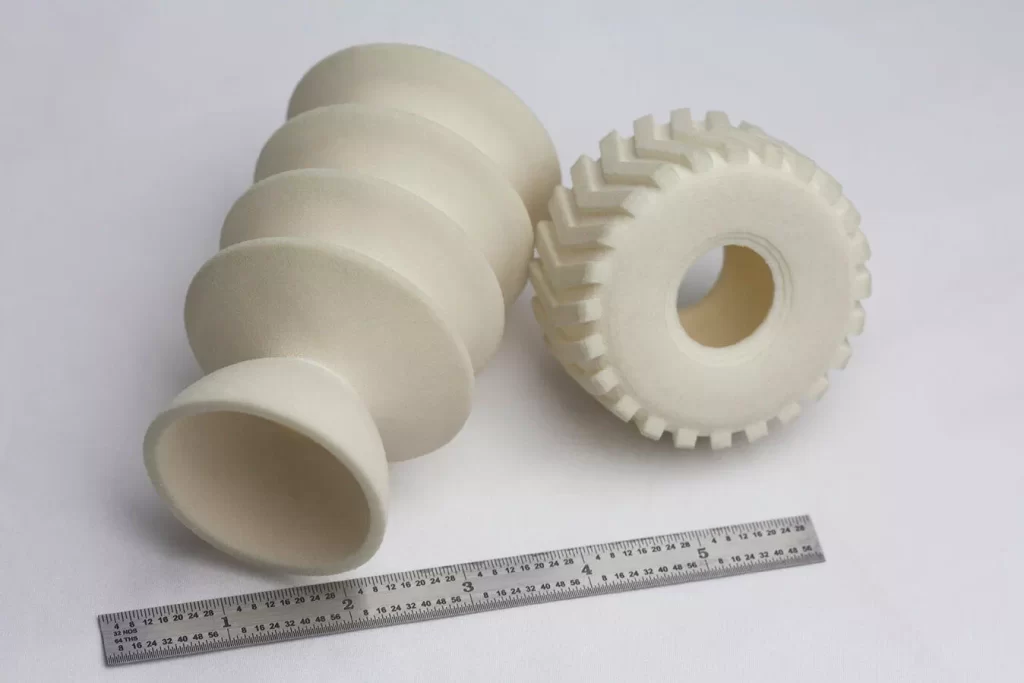
Manufacturing with Selective Laser Sintering 3D printing services is ideal for producing parts that look, feel, and perform like end-use components. They deliver a uniform matte finish with minimal visible layer lines. Functionally, they excel in demanding applications, providing consistent mechanical properties, abrasion resistance, and excellent impact resistance. These characteristics make SLS 3D printing an excellent alternative to injection molding or a superior solution for functional rapid prototyping at low to mid production volumes.
6-Step SLS Part Manufacturing Process
The powder is evenly dispersed in a thin layer on a platform within the build chamber.
The powder is preheated to a temperature just below its melting point.
A laser scans a cross-section of the 3D model, heating the powder to near or at the material’s melting point to fuse it.
The build platform lowers by one layer thickness, and a recoater applies a fresh layer of powder. The laser then scans the next cross-section, repeating until all parts are complete.
Parts are allowed to cool, then removed from the powder bed and surface-finished through sandblasting for a smooth texture.
Additional coloring options such as dyeing or painting are available to achieve desired colors.
What materials are used in selective laser sintering?
Selective Laser Sintering is limited to thermoplastic resins, as opposed to thermoset materials. In this process, polymer particles are fused together by the laser through melting. Typically, nylon-based resins are used for SLS, commonly including:
- Nylon-12
- Nylon-6
- Nylon-11
- Composite nylons
- Carbon-filled nylon
- Glass-filled nylon
- Aluminum-filled nylon
- Glass fiber-filled nylon
SLS Post-processing
We offer a comprehensive selection of post-processing options to ensure your parts meet your exact specifications.
Parts can be painted according to customer-provided color specifications, with options including matte, high-gloss, electroplating-imitation, varnish, and leather-effect finishes.
Surface textures are polished using various methods to satisfy specific customer requirements. Transparent components can be polished accordingly to enhance clarity and light transmission.
Our electroplating services enhance overall part strength, provide a metal-like surface texture, and impart certain metallic characteristics to finished components.
Internal threads are machined at specified pre-drilled hole locations.
Surface glazing is applied to parts, enhancing their appearance to better replicate the look of fine crafts. We also possess extensive assembly experience to ensure the final presentation of your product meets expectations.
Our advanced outer coating enhances structural strength, provides resistance to external abrasion, and helps minimize the risk of damage during normal storage and use.
A comprehensive range of measuring equipment enables us to provide tailored inspection services based on specific customer requirements.
Advantages of SLS 3D Printing
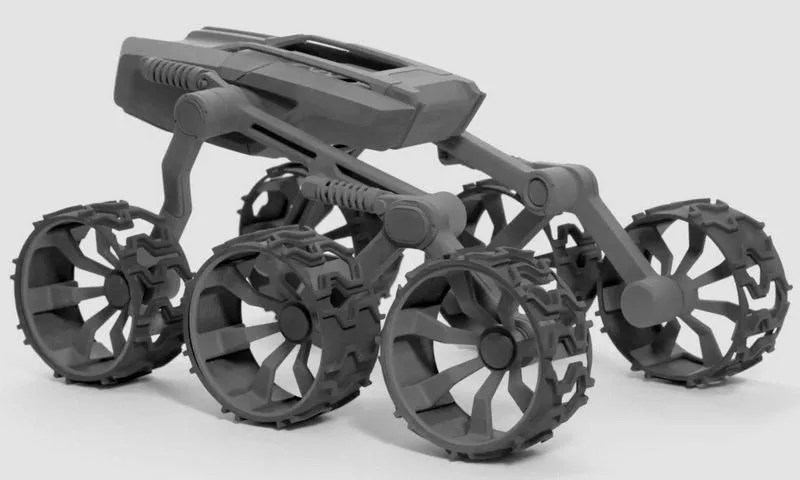
SLS 3D printing offers numerous benefits that make it a preferred choice among engineers and manufacturers. The process is fast, enabling high productivity, and produces parts with strong interlayer adhesion. It also allows for complex geometries that can be easily dyed or colored.
- Ideal for functional prototypes and end-use parts
- Enables complex geometries
- Suitable for low-volume production
- Rapid production capabilities
- High-strength material options
- Fast and flexible manufacturing process
Design guidelines for SLS
| Features | Recommended Size |
| Minimum Build Size | 5mm*5mm*5mm |
| Maximum Build Size | 400mm*350mm*350mm |
| Recommended wall thickness | 1.0mm |
| Minimum Embossed & Engraved Details | 0.8 mm deep & 0.8 mm wide |
| Minimum Clearance (between parts that will be assembled together) | 0.2mm |
| Minimum Clearance (between two moving or connecting parts) | 0.6mm |
| Threads Design | Thread pitch – 0.6mm |
| Minimum Escape Hole Diameter | 2.5mm |
| Minimum Holes design | 1.5mm |
| Minimum column design | 2.0mm |
SLS Common Use Cases
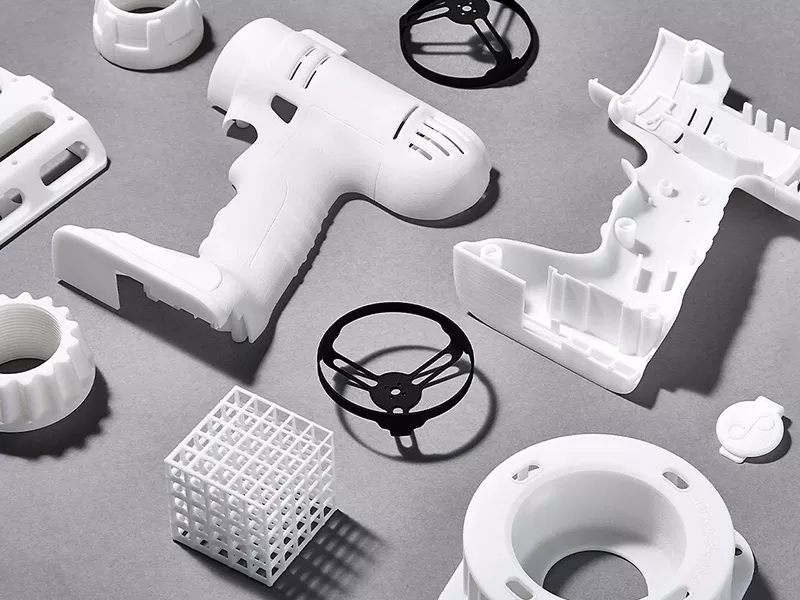
SLS is widely recognized for manufacturing components in the ducting sector, particularly those used in aircraft. It excels at producing multiples of a single geometry for low-volume production runs. Applications involving pressure or fuel exposure commonly utilize SLS technology. Additional examples of SLS applications include:
- Complex ductwork
- Snap-fit designs
- Living hinges
- Thin-walled components
- Fire-retardant parts
- Under-hood components
- Aerospace production parts
How do SLS and SLM (Selective Laser Melting) Differ?
Fundamentally, SLS and SLM represent two variations of the same core technology. Both are additive manufacturing processes that use a laser to shape powder materials into 3D objects. The primary distinction lies in the materials processed—SLS 3D printing mainly handles plastic materials, while SLM is specifically suited for metals. Additional differences exist in process details. In SLS, the build chamber and powder are heated to just below the melting point, requiring the laser to supply only the remaining energy needed to fuse the powder.
In SLM, however, the build chamber is not heated. Instead, it is filled with an inert gas such as nitrogen to prevent oxidation of the metal powder. Another key difference involves sintering versus melting. Melting involves a phase transition from solid to liquid state of the material. In sintering, the temperature does not reach the material’s full melting point; instead, particles agglomerate as grains heat sufficiently to bond with neighboring grains without completely melting.