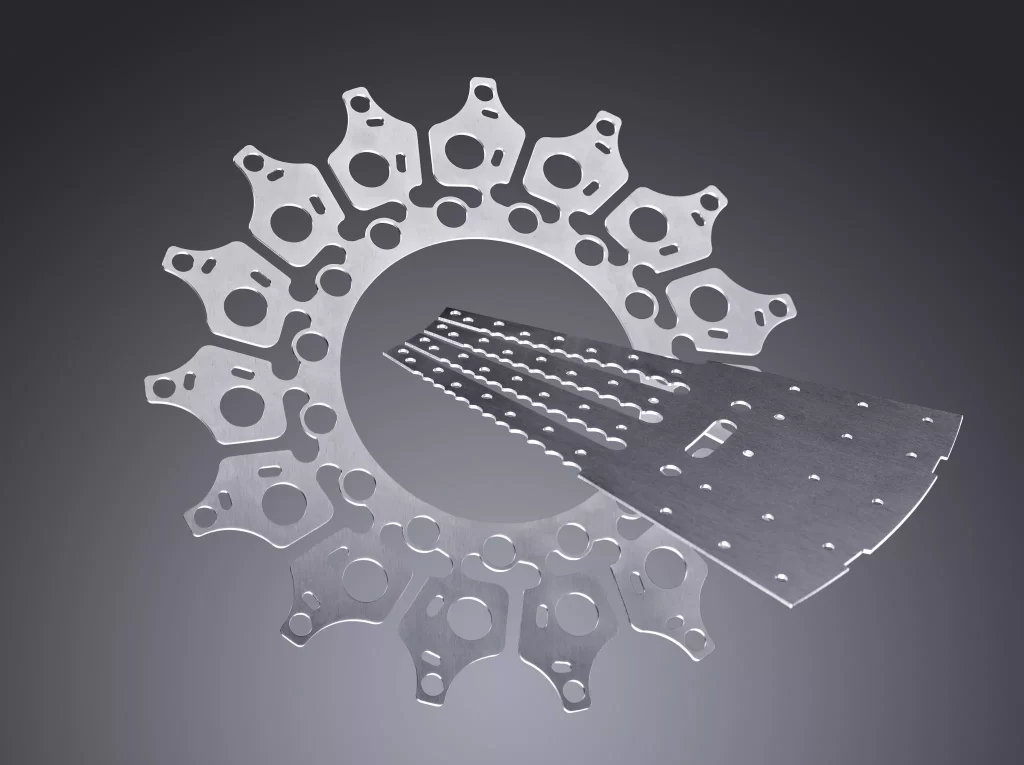
Sheet Cutting Services
Upload your CAD files to receive an instant quote for laser-cut or waterjet-cut prototypes and production parts, with no minimum order quantities.
What is Sheet Cutting?
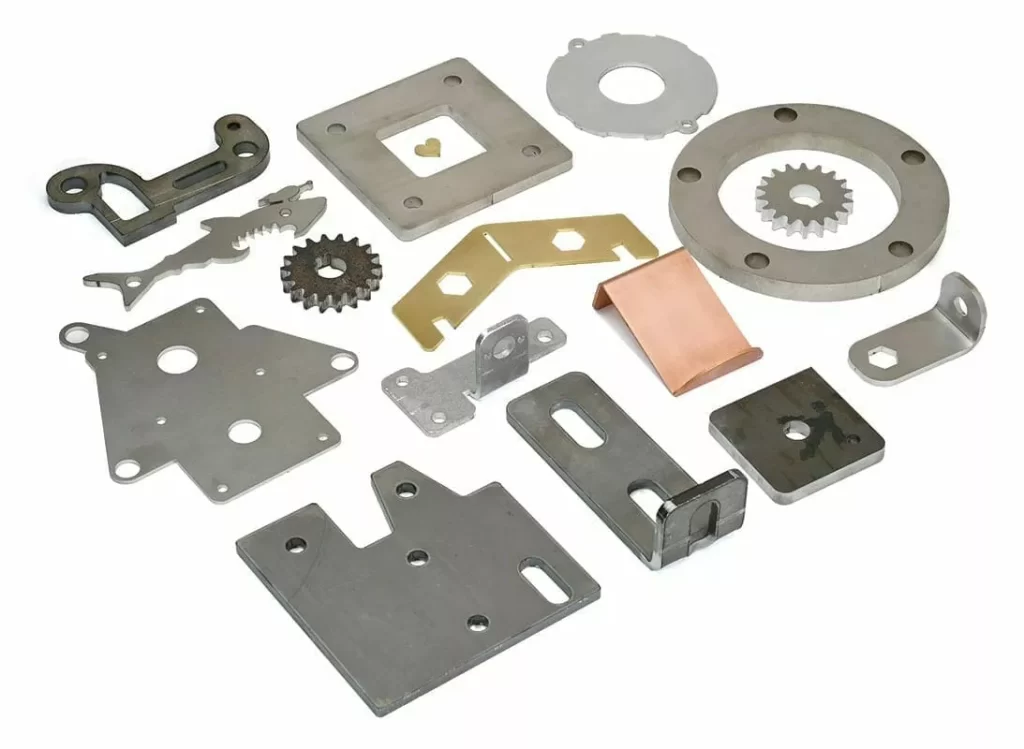
Sheet cutting encompasses processes that slice through flat stock material along a profile to produce a desired shape. Sheet stock is cut using high-powered CNC laser or waterjet equipment, with the material’s gauge determining the final part thickness. From one-off batches to mass production, custom designs can be cut from a wide variety of materials, including plastics, elastomers, composites, metals, and more. Sheet cutting is also commonly used for blank preparation in other manufacturing processes such as sheet metal fabrication or metal stamping.
Fuming’s sheet cutting service can cut nearly any material using advanced laser and waterjet capabilities. From clear acrylic panels to thick tool steel, Fuming’s manufacturing platform offers a one-stop-shop solution for any project, featuring instant quoting and a broad selection of materials.
Fuming Online Quotation System
Upload your design files to our instant quote platform and receive pricing, lead times, and DFM feedback for sheet cutting instantly. We specialize in sheet metal cutting and processing, offering flexible production and shipping solutions tailored to meet your product development needs.
Fuming Sheet Cutting Sizes and Tolerances
| Feature | Description |
|---|---|
Blank Size | Fuming offers access to platforms up to 10′ x 20′ for laser cutting and waterjet cutting. However, standard sheet stock sizes commonly cap out at 48″ x 96″ (4′ x 8′) or smaller. |
Standard Lead Time | 3 business days |
Sheet Thickness | 0.020″ up to beyond 1.00″ depending on materials. Thinner or thicker stock may be possible through manual quoting. |
General Tolerances | For complete details on tolerances available through Fuming’s sheet cutting service, including edge-to-edge tolerance and taper, please refer to our manufacturing standards. |
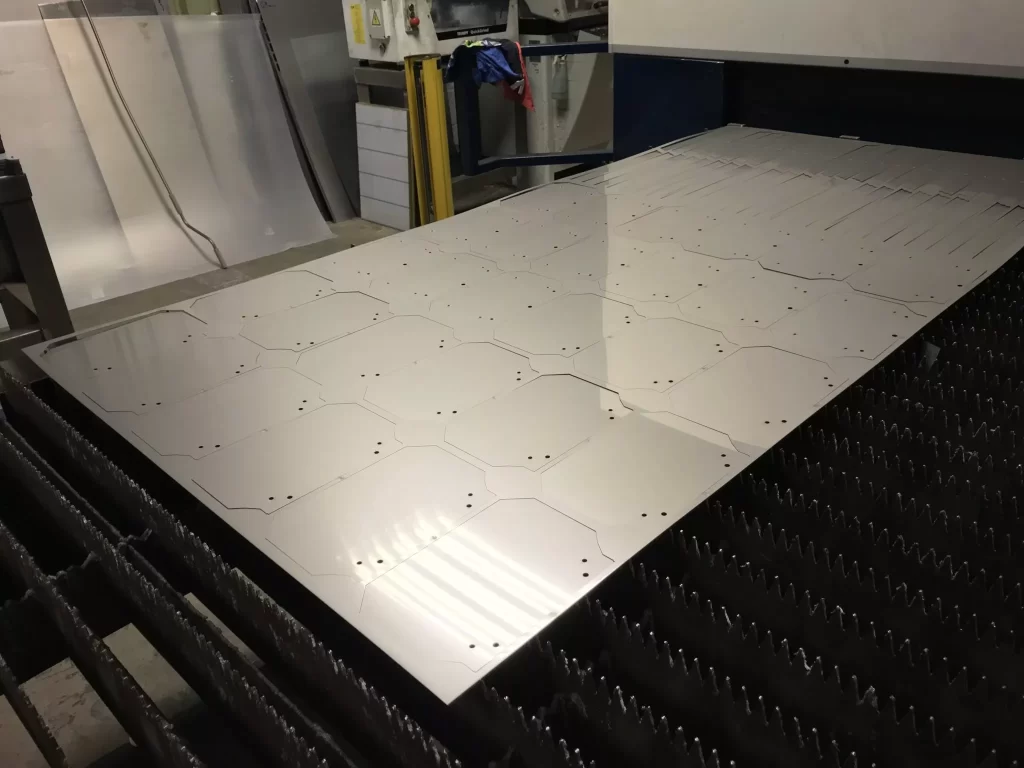
How Fuming Sheet Cutting Works
Fuming’s sheet cutting services partner with leading laser cutting and waterjet suppliers across the US and globally. Fabricators begin by converting CAD files and drawing data into machine code. A laser cutting, waterjet, or plasma cutting machine then precisely cuts the sheet material. If assembly or post-processing is required, our manufacturing partners provide turnkey finishing services to complete the parts.
The efficiency and high precision of these CNC-controlled cutting tools, combined with Fuming’s extensive material selection, network of suppliers, and post-processing options, ensure you receive parts suited for virtually any application. Sheet cutting applications span industries such as aerospace, automotive, energy, industrial equipment, medical and dental devices, art, robotics, and consumer products.
Sheet Cutting Materials
Aluminum 6061 T6, Aluminum 2024-T3, Aluminum 5052 H32, Aluminum 7075 T6, Aluminum MIC6
Brass 260, Brass 353 H02, Brass 464 H01, Bearing Bronze 932 M07, Bronze 220 H02, Bronze 510 H08 (spring) Silicon Bronze 655
Copper 101, Copper 110
EVA Foam, Polyurethane Foam (PU), Silicone Foam
Buna-N Rubber Blends, EPDM, Silicone Rubber, Paper Fiber, PTFE
De-Tabbing, Deburr, and Finishing
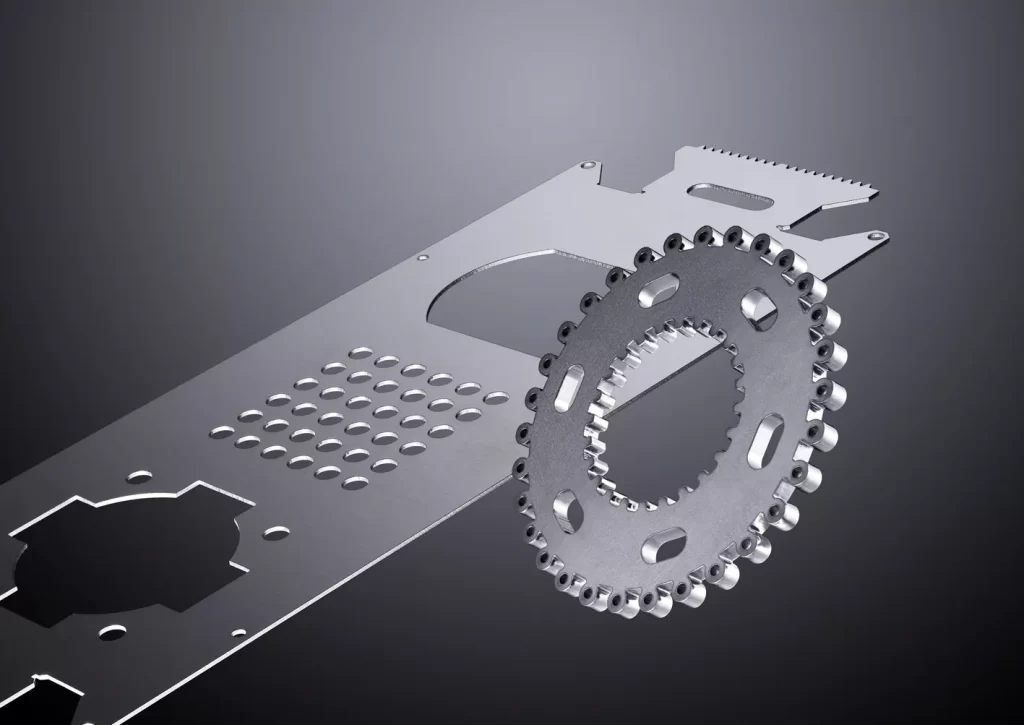
Parts are separated, with any tabs ground off and all burrs removed. Additionally, components are cleaned to eliminate discoloration, surface debris, manufacturer markings, and scratches.
Parts are separated from one another, and any remaining tabs or connections to the source sheet are ground down. The area where tabs were removed may exhibit a slightly different texture or appearance compared to the rest of the component.
Your parts will be detached from each other and from the original sheet. A small vestigial tab may remain where the parts were originally connected to the source material.
To reduce costs, you may choose to receive parts still tabbed together on the source sheet, attached to each other, or secured to a support structure. In this case, you would be responsible for separating the parts yourself. Laser-cut and waterjet-cut parts may also have fine burrs following the cutting process.
Parts are finished in a blasting cabinet using a high-pressure stream of fine glass beads, typically with 80-grit media applied at 70–100 psi. This process gives the surface a uniform matte or satin-like cosmetic appearance.
Alternatively, parts are finished in a vibratory or rotary tumbler with appropriate tumbling media. This method provides an even stippled finish across the entire surface and tends to slightly round sharp corners and edges.
What Additional Finishes Are Available for Sheet Cut Parts?
A standard finish, requiring no additional post-processing, is available for all materials. The surface remains as-is after your selected de-tabbing and deburring options have been applied. Plastics and cosmetically finished products may retain an overwrap on the faces during production. It is common for pre-polished, brushed, or textured materials to have only one side cosmetically finished.
Metal parts are finished by hand sanding, abrasive belt sanding, or using a timesaver, following the direction of the grain to achieve a uniform appearance. This method is also known as linear finishing.
Alternatively, metal parts are finished by hand sanding, orbital sanding, or using a timesaver in a random pattern or swirl to create a consistent surface. This technique is referred to as a random swirl finish.
Similar to our other services, Fuming offers comprehensive turnkey finishing solutions, including anodizing, chem-film, metal plating, powder coating, heat treating, passivation, as well as multiple custom finishing options. For samples and further details, please visit our Metal Finishes Gallery.
Design Tip: Use Standard Gauges
Sheet cutting relies on stock material sizes to deliver cost-effective and quickly produced parts. It is essential to design around commonly available stock sizes or standard gauges for your chosen material to avoid delays in material sourcing.
If a specified design thickness falls within the tolerance range of a standard gauge, Fuming will source that standard gauge for the project. Thickness tolerances are independent of cutting tolerances, as they are determined by the raw stock material’s inherent tolerance range.
Certain processes such as plasma cutting, flame cutting, and waterjet cutting can slice through very thick stock materials, though they may require a manual quote review. Generally, as stock thickness increases, the availability of large sheet sizes decreases.